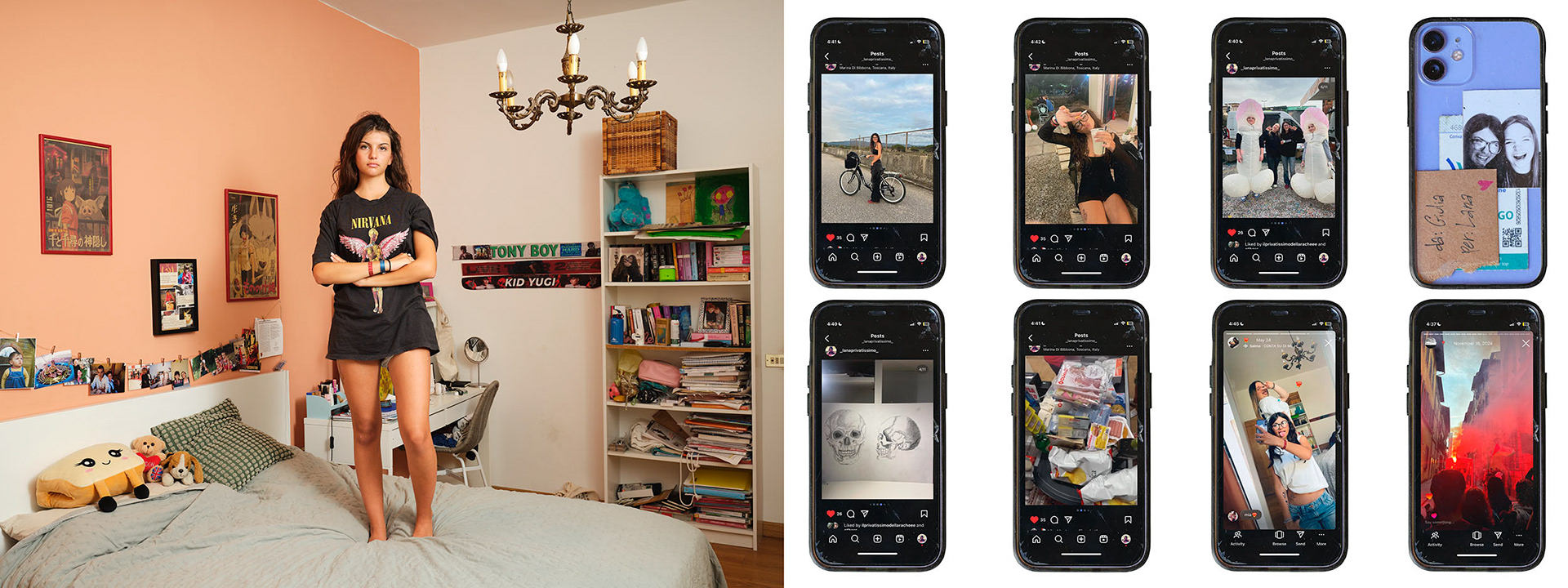
She was eleven when, after long negotiations with her parents, Lana got her first smartphone — not the most coveted model among her classmates, but a door into a world she'd only watched from the outside. Today TikTok is just a pastime, while Instagram has become a personal diary, a mosaic of profiles from the most public to the most private. Yet her most authentic space isn't online — it's her bedroom, headphones on, sketchbook open, a pile of books from young adult novels to Dostoevsky and Freud. She's sharply aware of social media's dual nature: its creative potential, and its pressure toward conformity. She expects it to remain central to her life going forward.
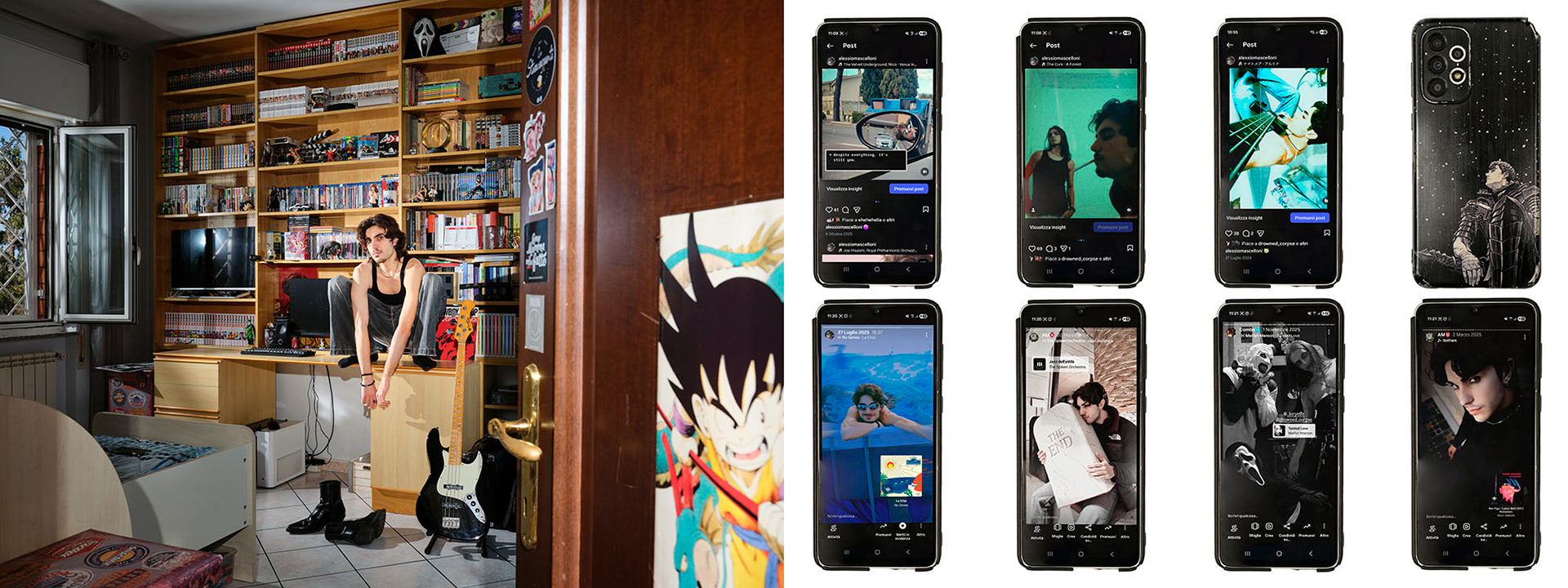
Born and raised in Rome, Alessio studies film directing and works as a bartender, with his sights set on becoming a director — drawn especially to stop motion animation. His first phone came at his communion; the smartphone followed at 14, driven by a growing interest in images and video. He feels most himself in his room, surrounded by Blu-rays, comics, and memorabilia — above all *The Lord of the Rings*, the film he first saw in a cinema at age three and still a strong emotional bond today. On Instagram he doesn't build one fixed identity, shifting instinctively between different aesthetics and sides of himself.
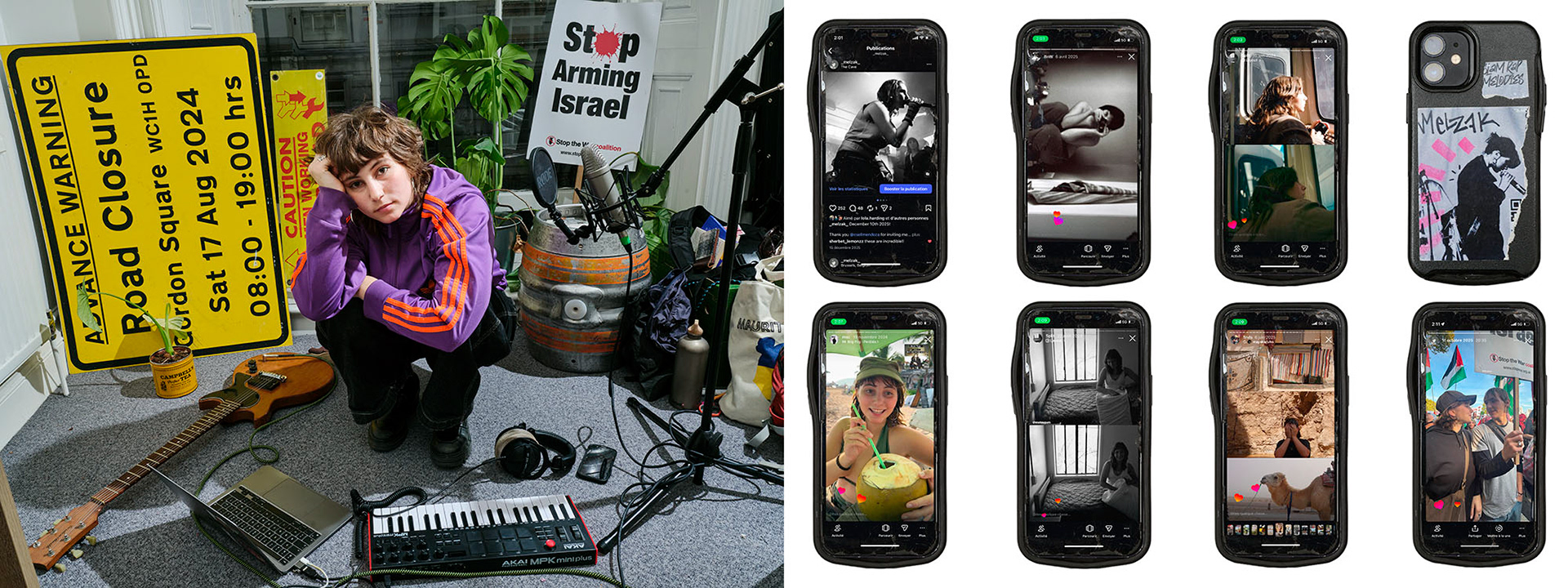
Born to a British-French family, Amélie studies Film and Creative Arts in London. Her first smartphone arrived at twelve, easily — rules already tested on her older sister. She feels far more represented by her room, filled with books, notes, cinema tickets, and plants, than by her online presence. The object she feels closest to is her notebook, filled with thoughts and poems since her early teens — losing them once, when her backpack was stolen, hurt more than losing money. She uses Instagram as both a portfolio and a source of unease, wary of comparison and curated identities, but she also recognizes its power to connect people and circulate art.

Having just graduated in interior design, Lorenzo is entering his first phase of independence. He feels most himself neither online nor in his bedroom, but outside, with friends — social media, especially Instagram, is a way to stay connected without becoming the center of his life. The object that represents him is make-up, which he started using four years ago as a way to explore different identities. Lady Gaga is a key reference — for him, a symbol of the freedom to be different and not conform.

Born in Campania, raised in Abruzzo, now in Florence, Andrea studies English and American Studies but lives artistically — performance poetry, music, drag. He got his first phone late, after family resistance, and today uses Instagram with critical distance: a public profile for slam and queer content, a private one where his body, as a trans person, becomes a space for self-representation. He sees clearly how social media has reshaped his generation's relationships and expectations, and published a poetry collection in 2022 while deliberately avoiding promoting it online — for him, writing is layering, not fast consumption.
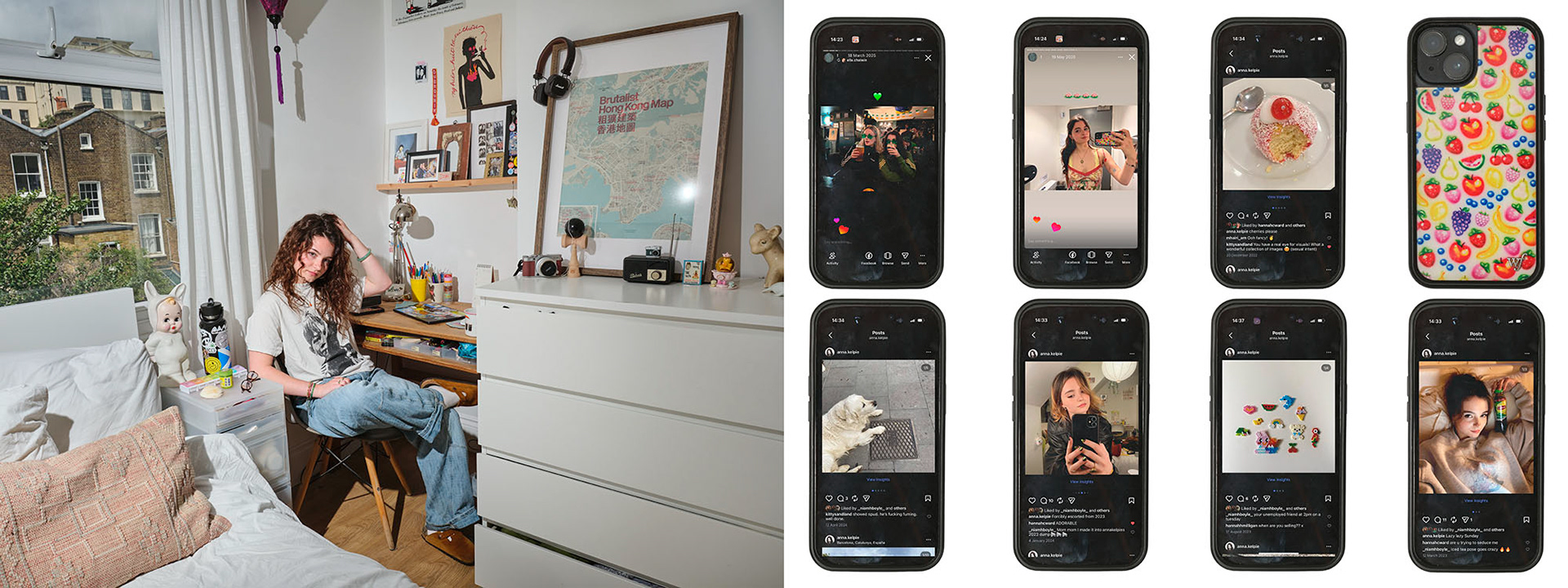
Anna grew up with a camera in her hands; her first phone arrived at eleven, before a family trip to London, and what excited her most was the chance to photograph and film the world. After more than a decade online, social media feels natural rather than performative — but she believes her room, filled with collected objects and mementos, reveals more about who she is. The object she feels most connected to is a board covered with badges and souvenirs, a habit inherited from her father. On Instagram and TikTok she rarely centers herself, preferring photographs of places and details along the way.
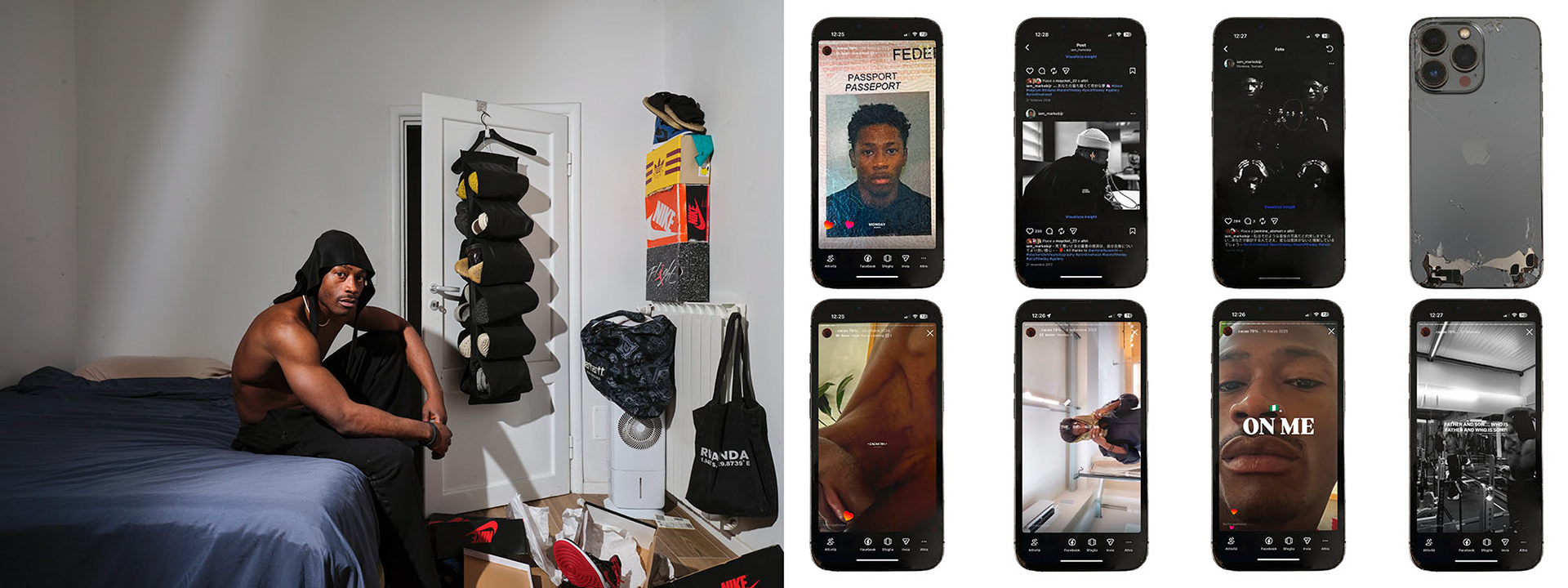
Born in Nigeria, raised in Italy, Mark now lives in Florence, studying design and working as a freelance creative. He earned his first smartphone himself at 12, through small jobs and reselling modified clothes — his first real act of independence. His room is a sacred space, almost a temple, somewhere to think; for years he didn't even sleep there. He rarely posts on Instagram, using it instead to observe communities rather than individuals, and for a long time worked on altering his own image in photographs to escape identity labels.
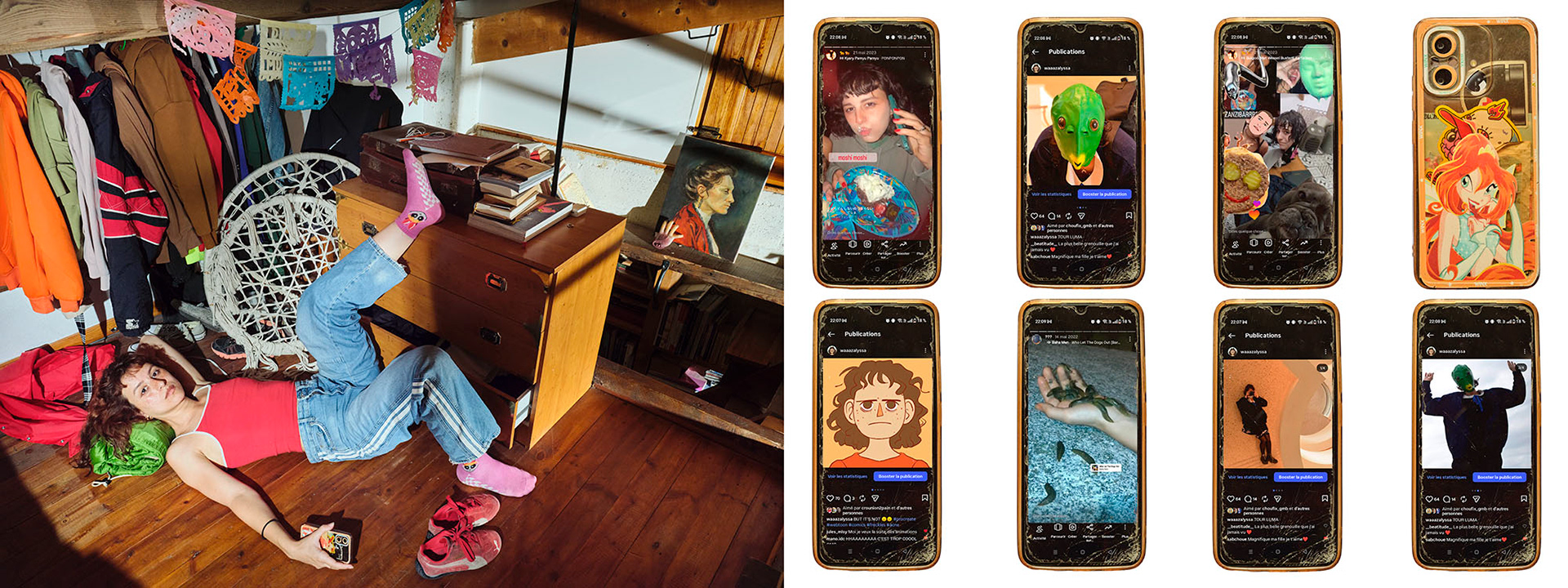
Alyssa got her first basic phone in middle school — no camera, no internet — and preferred the family computer and forum chats anyway. She still feels more herself in her bedroom than online, since social media captures only fragments of her personality. If she had to choose one object to represent her, it would be her smartphone itself — a personal archive of photos, games, and everyday memories. She rarely posts on Instagram, preferring to observe comic artists and news accounts, but she considers social platforms essential as a gateway to knowledge and to reaching an audience for her creative work.
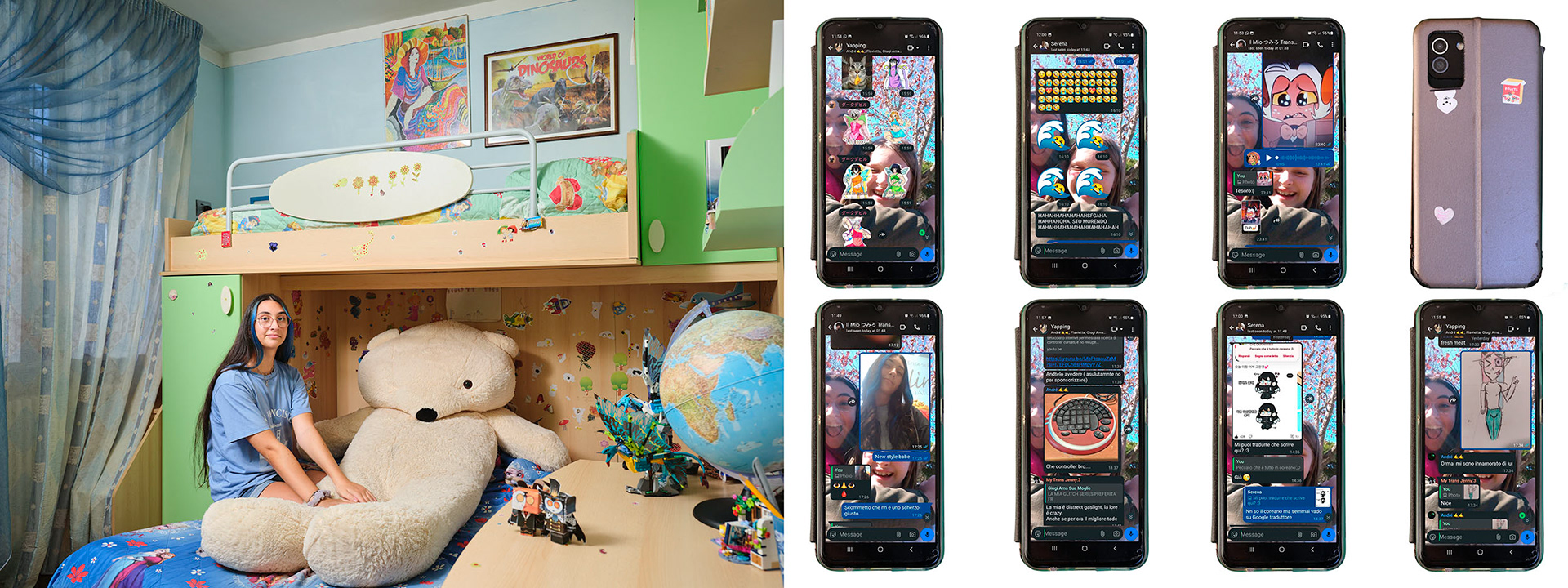
Sofia attends an art high school specializing in multimedia and animation. Unlike many of her peers, she never really wanted a phone — at 11, it was her parents who convinced her, since a tablet for drawing had been enough. Her most authentic space is her bedroom, where she builds paper Funko figures inspired by the shows she loves; her parents have blocked Instagram and TikTok, so she mostly uses WhatsApp to share drawings and homework. She sees social media as having both positive and negative effects, but still imagines it as part of her future as an animator.
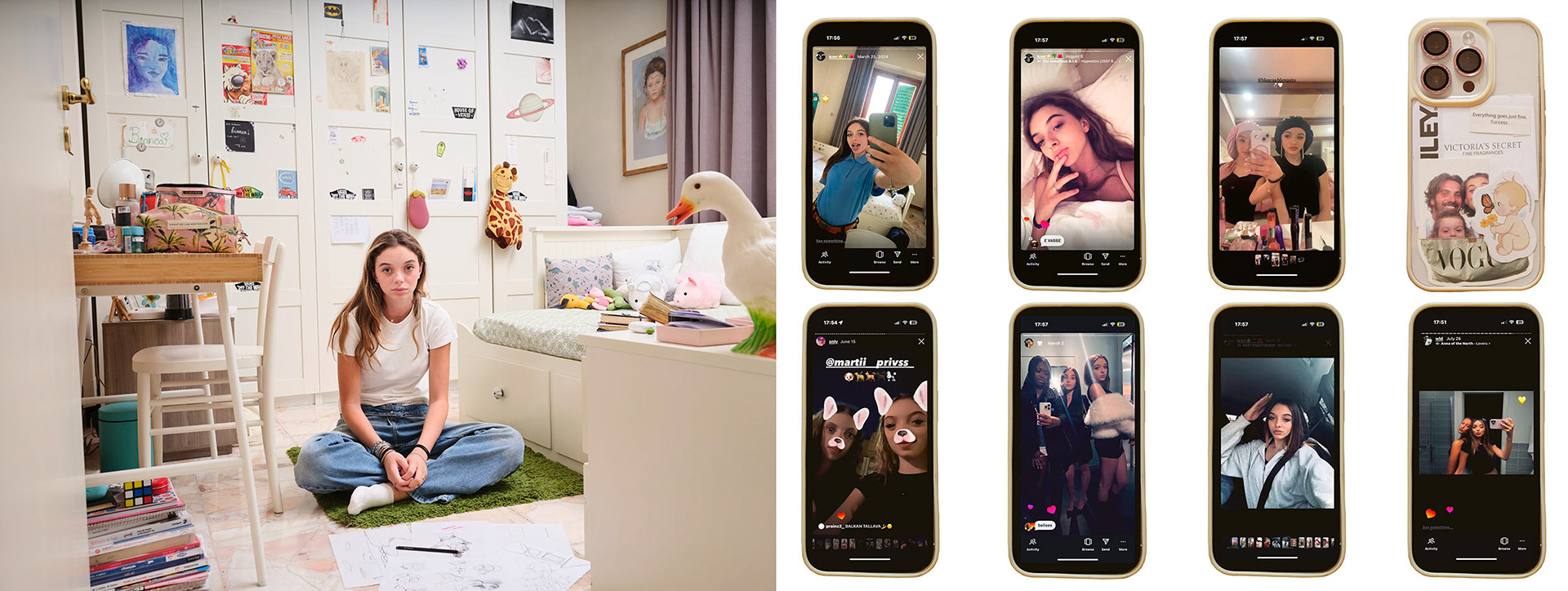
Bianca got her first smartphone in middle school after insisting with her parents, wanting to stay in touch with friends outside school. Instagram is her favorite platform, used to follow classmates and keep memories — images, she says, represent her the most, filling both her room and her profiles. When she posts, she avoids heavy editing, sticking to light, playful filters with friends. She takes inspiration from model Madeline Argy rather than influencers in general, and dreams of a future in fashion and cinema, with social media present but never at the center.
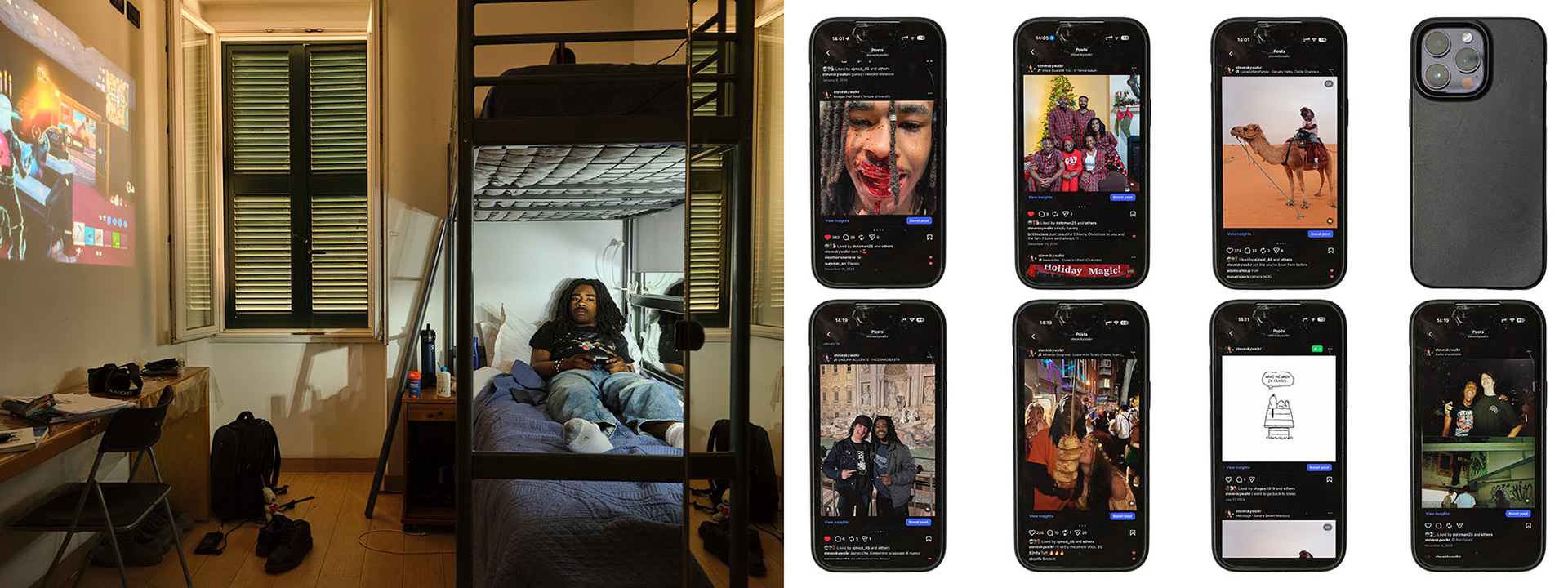
Originally from Pennsylvania and studying at Temple University, Stevie is currently in Rome on a study abroad program, moving between cities but always treating his room as a constant space. He grew up with technology early — tablet, then a phone without service, then a real smartphone at 13. Online he feels more fragmented, shifting identity by account, always keeping distance from his most authentic self. The object that represents him is his camera; he manages two Instagram accounts, one controlled and public, one where he's archived each week of his life for years.
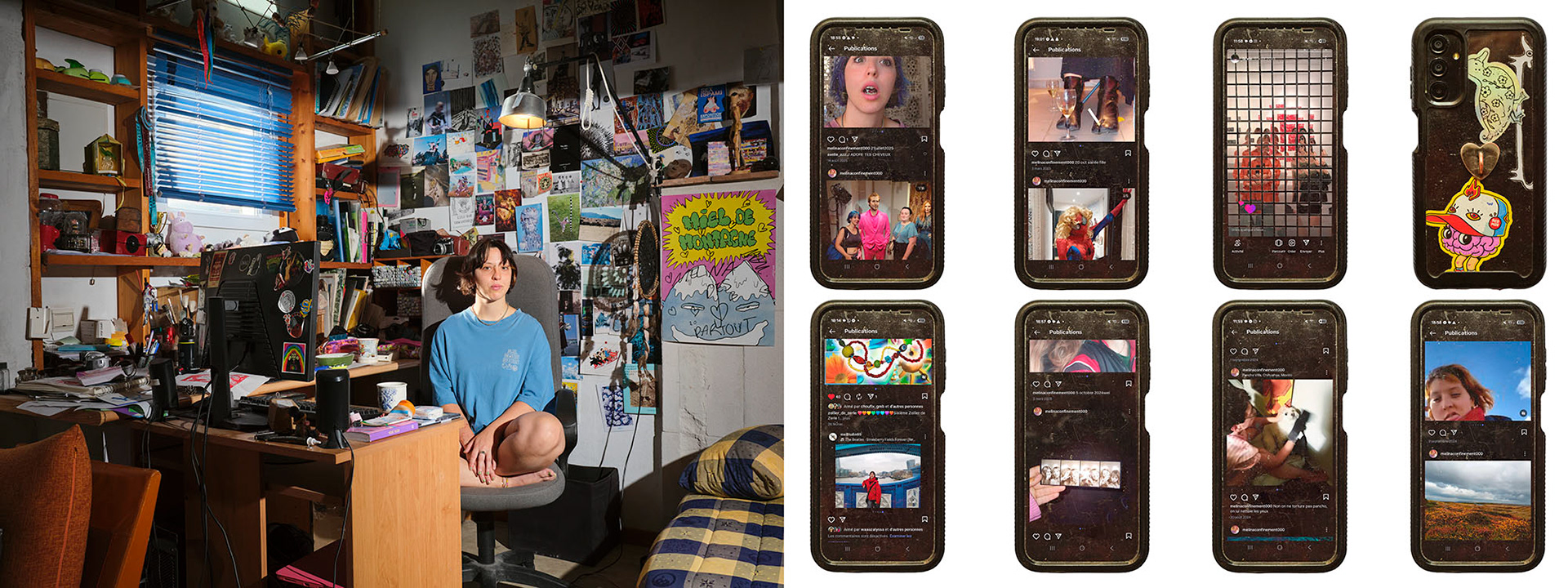
Melina feels most herself in her bedroom, free from other people's expectations. The object that best represents her is her sketchbook, where she draws without limits and expresses herself more honestly than online. She spends more time observing than posting on Instagram, keeping a second account with a single follower simply to remember moments of her life. She follows musicians like Billie Eilish and artists whose creative growth she enjoys watching — and considers Instagram less a stage than an essential space for learning, creating, and sharing art, even if comparison sometimes feels discouraging.
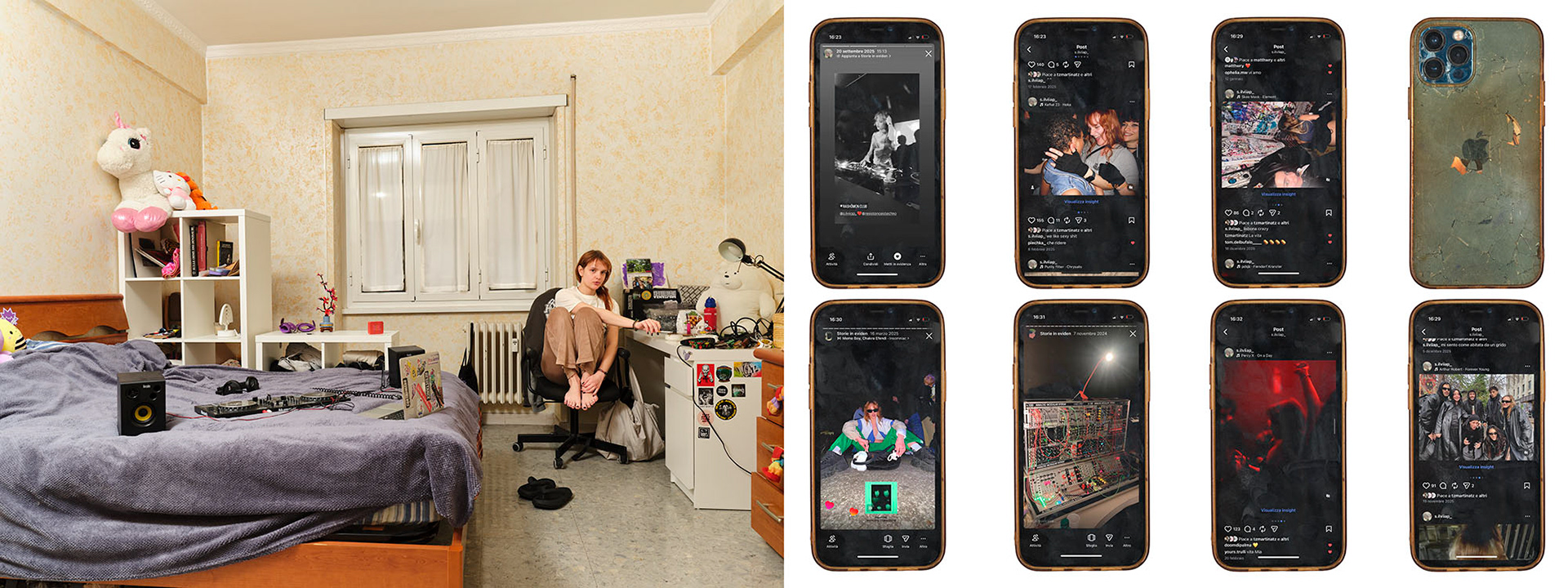
Originally from Pescara and now in Rome for five years, Silvia studies international cooperation and works for an NGO, while music runs through everything she does as a DJ in a techno collective. Her first smartphone came at 11-12, wanted more out of a desire to belong than necessity. She feels herself both offline and online, but differently — quiet and intimate in her room, more expressive and extroverted on Instagram. The object that represents her is the console: music is her primary language, a way to translate emotions into sound. Posting instinctively and without a plan has occasionally caused family friction, but she's chosen to keep expressing herself without filters.

Francesco, 23 — Pistoia
Narrative
A web developer and social media manager, Francesco lives in the city where he was born. His first phone came in middle school, a Christmas gift given more out of necessity than desire; social media followed a few years later. He feels most himself in his bedroom. He uses Instagram mostly to observe — following pages, looking at projects, staying updated — while his own personal profile has sat empty for years, without photos or stories. He prefers to experience moments without turning them into content. The object that represents him is Erich Fromm's To Have or To Be?, found by chance at a street market, whose reflection on a society too focused on possession over being struck him deeply. Though he already works professionally in the digital field, managing
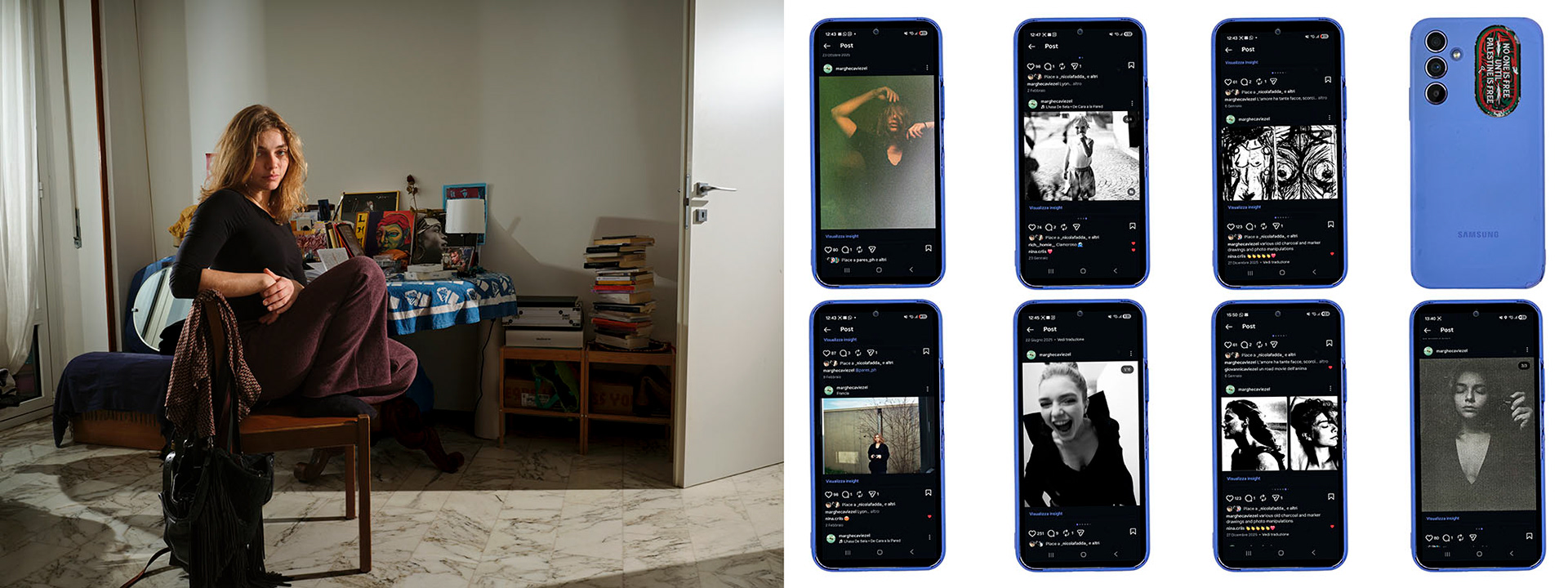
An actress, performer, and singer living in her native Milan, Margherita moves across theatre, cinema, photography, and writing as variations of the same need to tell stories. Her first smartphone was an old iPhone passed down from her father, through whom she first discovered Instagram as a visual archive rather than a personal diary — still how she experiences it today. In her bedroom, both studio and refuge, she feels freer and less "posed"; online she shows a filtered, not superficial, part of herself. The object that represents her is her notebooks, filled since childhood with notes, artist names, and exhibition tickets.
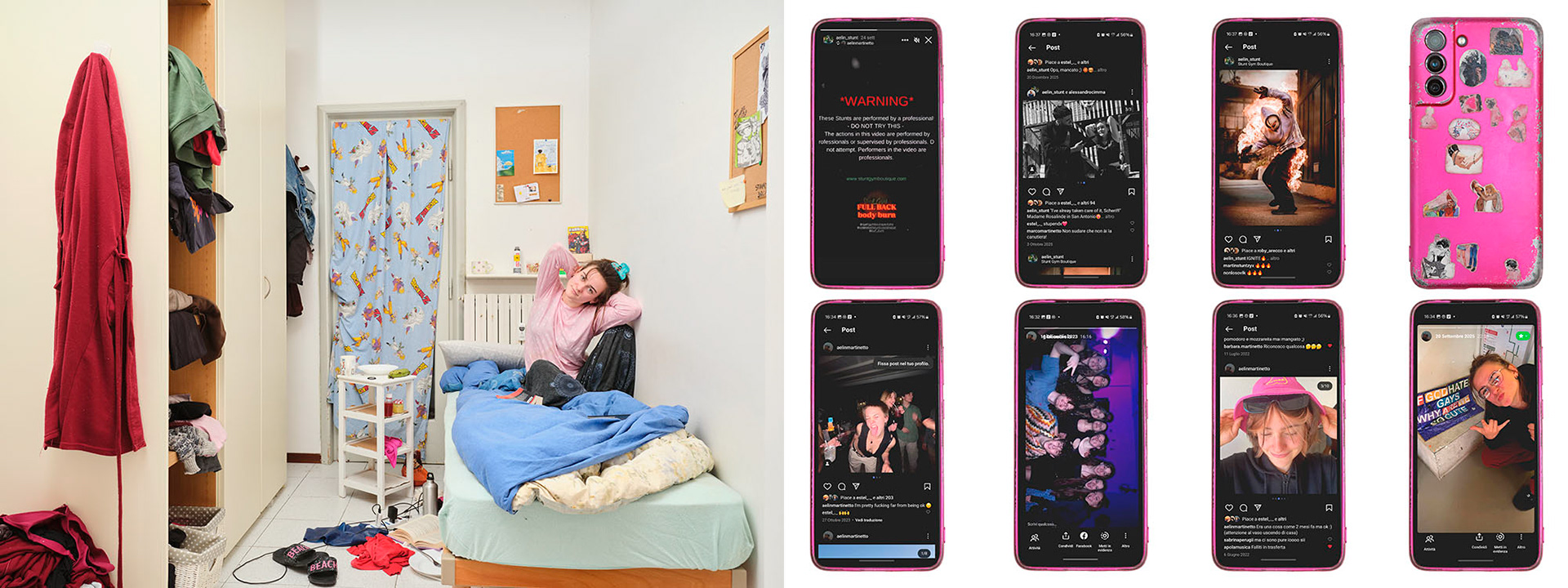
Born in 2005 and raised in the mountains near Cuneo, Aelin is a stunt performer and philosophy student now living in Novara. Her room, once perceived as a "cage," has gradually become a personal refuge. She got her first mobile phone in middle school, more out of necessity than desire, and her relationship with social media today is defined by subtraction — she has deleted Instagram, preferring the slower pace of YouTube and the aesthetic world of Pinterest. A Winx Club glass retrieved from her grandmother's house symbolizes her balance between childhood and adulthood, strength and fragility.
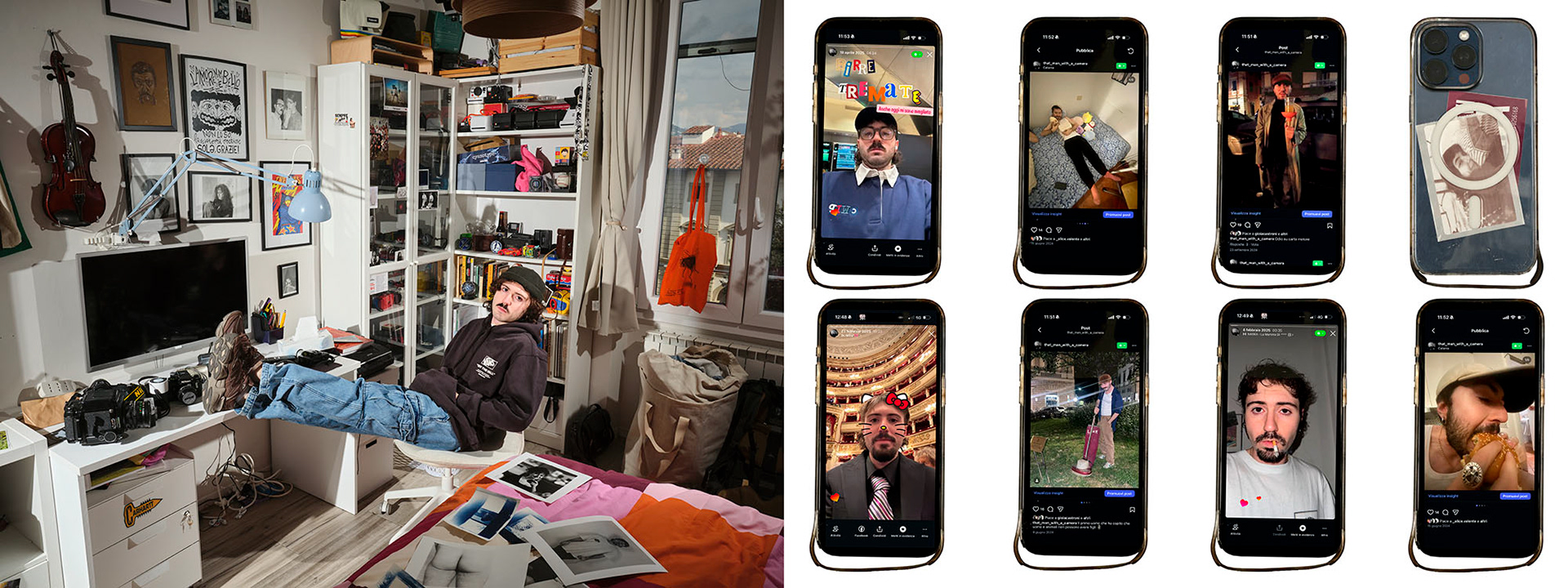
Born in Porto Venere and now studying Photography in Florence, Michael got his first smartphone at fourteen, an iPhone 3 handed down from his brother, more his parents' decision for safety than his own desire. Asked where he feels most himself, he doesn't hesitate: his bedroom, where he can be fluid and undefined, unlike online, where he says you have to present a fixed image. The object that represents him is his violin — an instrument without frets, no fixed points, requiring constant listening and dialogue to understand. He follows creators like Tony Pitony, and draws a clear line between online friends and those he meets in person.
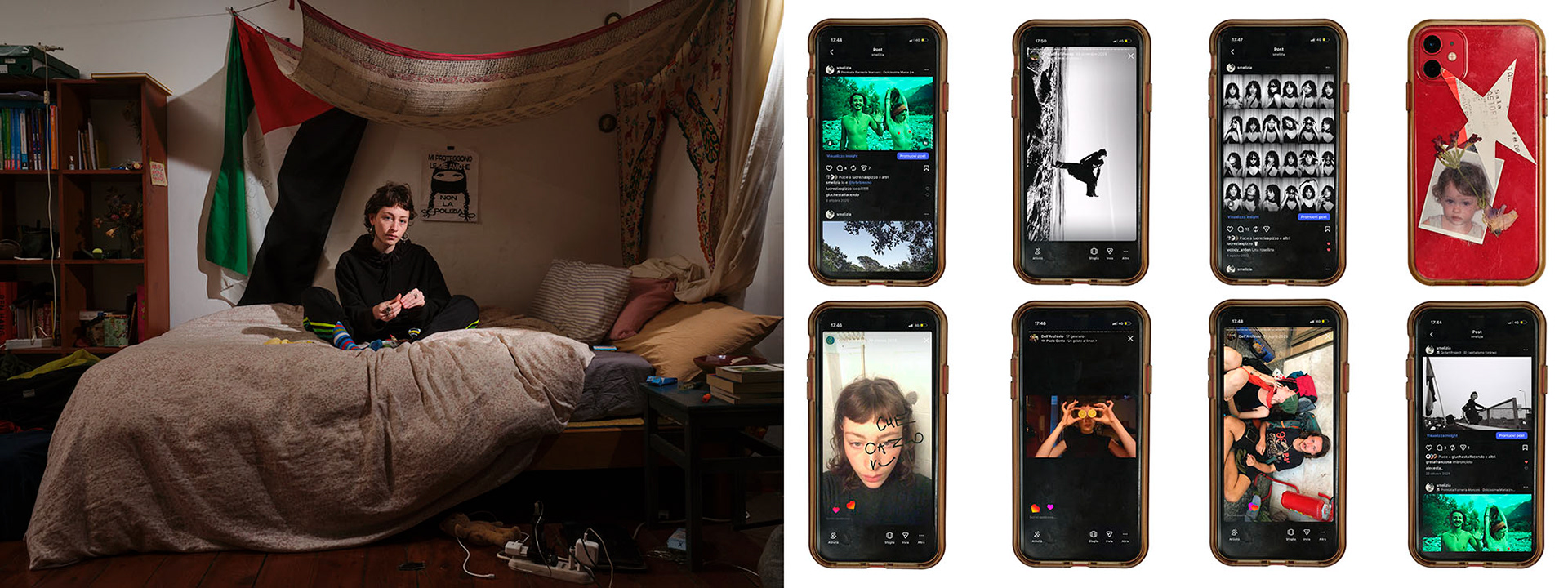
In her final year at an art high school, Amelita grew up with strict parents — no television, a smartphone only in middle school, initially limited to thirty supervised minutes a day. She feels more herself in her bedroom than online, since her room holds what social media doesn't see: sadness, fragility, happiness. The dried flowers scattered around her room, each dried by hand, represent a fragility that is exposed yet resilient. She only uses Instagram, drawn to aesthetics and sharing meaningful fragments rather than constructing a persona, though she still spends more time on the platform than she'd like and is actively seeking alternatives — a film, a book, something that leaves a trace.

Anna attends a language high school. She got her first phone in middle school, after weeks of insisting — all her friends already had one, and until then she'd had to follow the class chats from her mother's phone, who sometimes read the messages and passed them on to other parents. That feeling of being watched stayed with her, turning the phone into both an object of freedom and a mediator between her and the adult world. Today she splits her time between her bedroom — a refuge for reading, music, and hours lying on her bed — and social media, where she holds a double identity: a curated, image-conscious public profile, and a private one where she can be spontaneous, ironic, even chaotic. On Instagram and TikTok she mainly looks for new music and rappers to follow, while staying in touch with friends. She sees social media as a distorted lens, but observes it with a mix of curiosity and caution, aware it's already part of her present and, inevitably, her future.
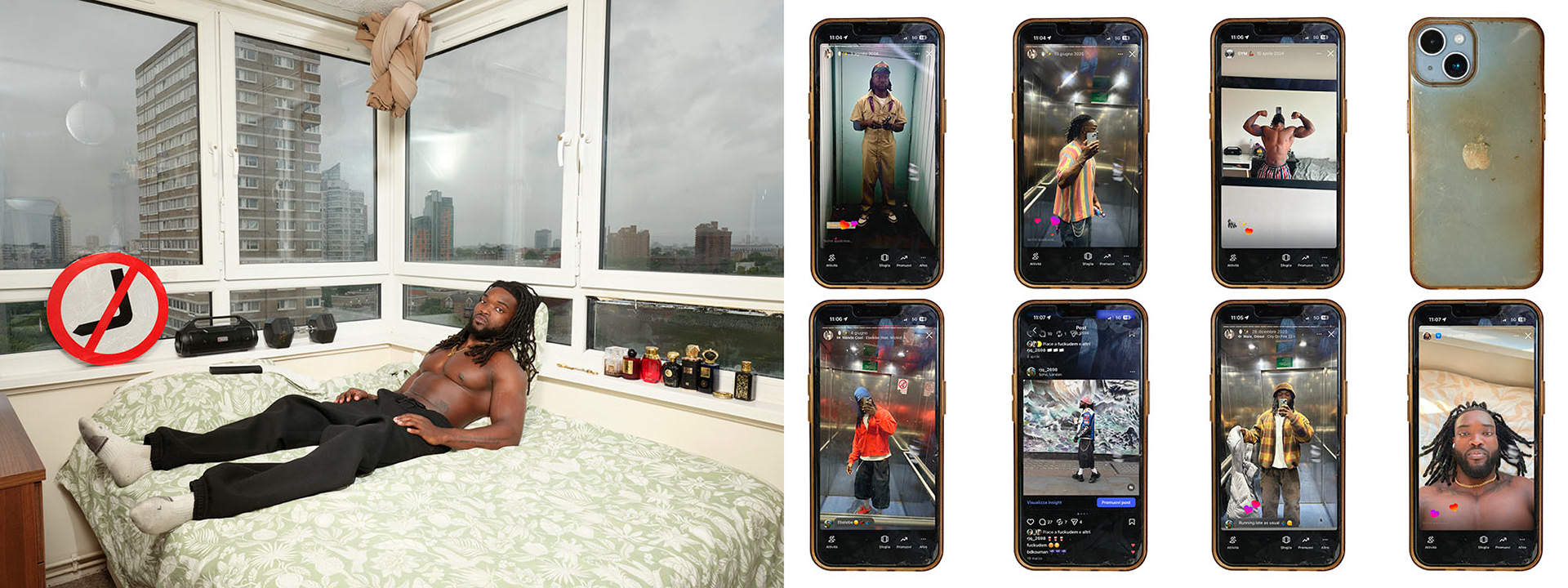
Born and raised in Modena to a Ghanaian family, Roberto has lived in London for eight years, working as a personal trainer and bartender. His first phone came at eleven, his first smartphone only at fifteen or sixteen, after a long wait. He feels most himself in his room, not online, and sees social platforms with a certain distance — as a partial fiction that doesn't always reflect real lives. The object that represents him is his music, specifically the headphones that rarely leave his side. His dream, disarmingly simple, is to bring his family back together in one place, needing little more than a phone.
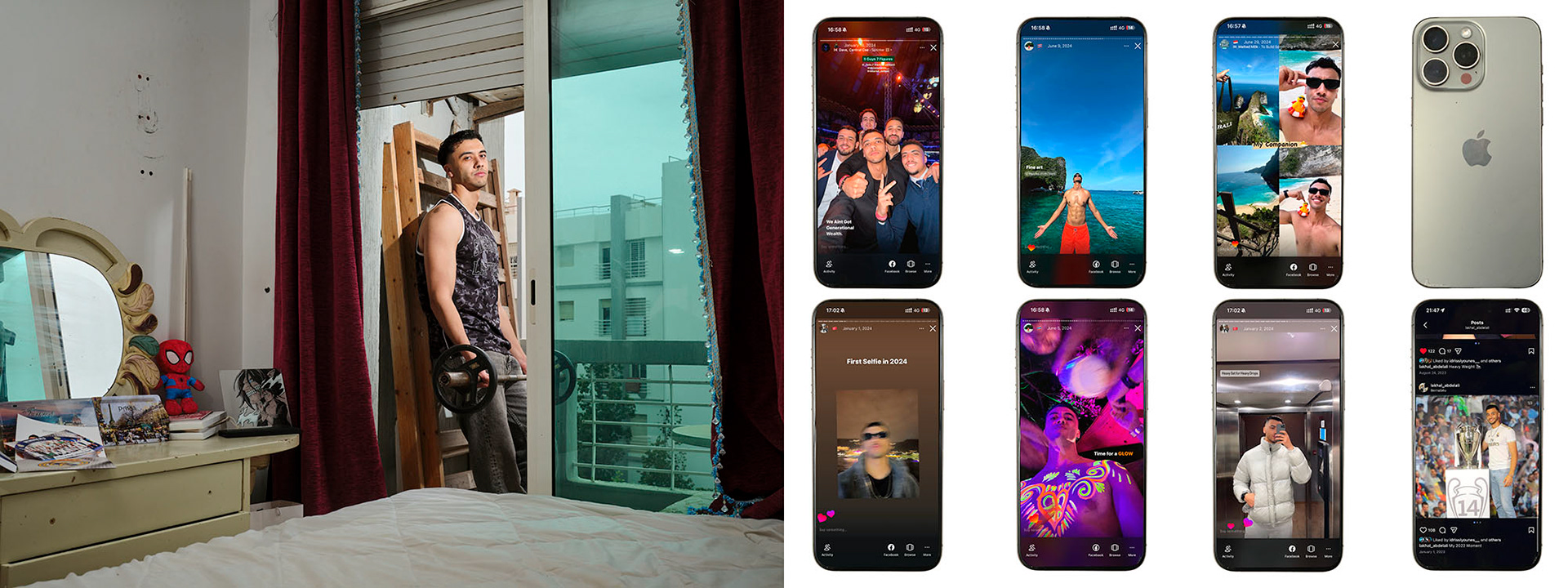
Working in social media marketing in Morocco, Ali's professional life is built inside the digital world. His first smartphone didn't come easily — a gift after years of old, broken phones — and when it finally arrived, everything changed: for the first time, he could take photos, share them, and see himself differently. Unlike many others in this project, he feels more like himself online than in his own room, which he sees as a place to rest rather than express. The object that represents him is a mirror — not just to reflect himself, but to imagine who he could become.
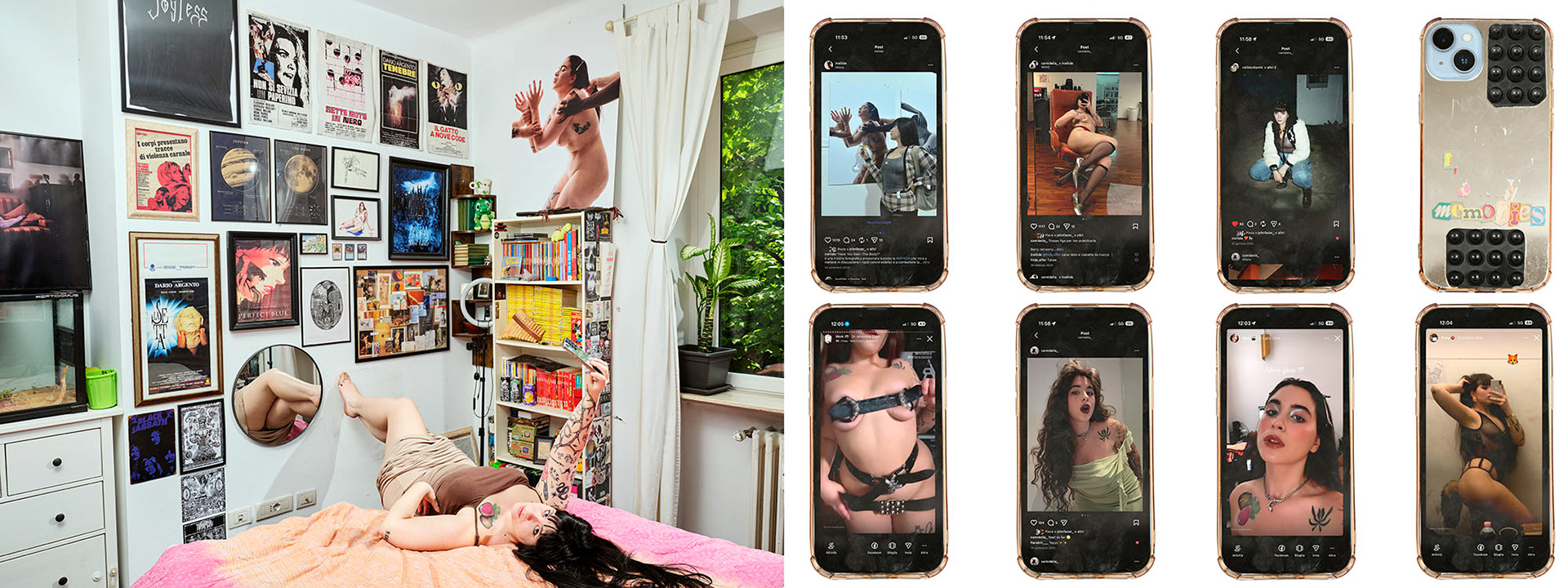
Born and raised in Milan, Elide works as a model and content creator, her professional life deeply intertwined with her digital identity. She got her first phone, a flip Nokia, at 12, out of necessity. She feels more herself online than in her own room — home is routine, while social media becomes a 360-degree space for her more performative sides. Her objects are vinyl records, especially Tenco, and photos with her cats, coexisting alongside an explicit, unfiltered representation of her body. She uses a three-hour daily timer to set boundaries, even as she treats her private profile as an unfiltered personal logbook.
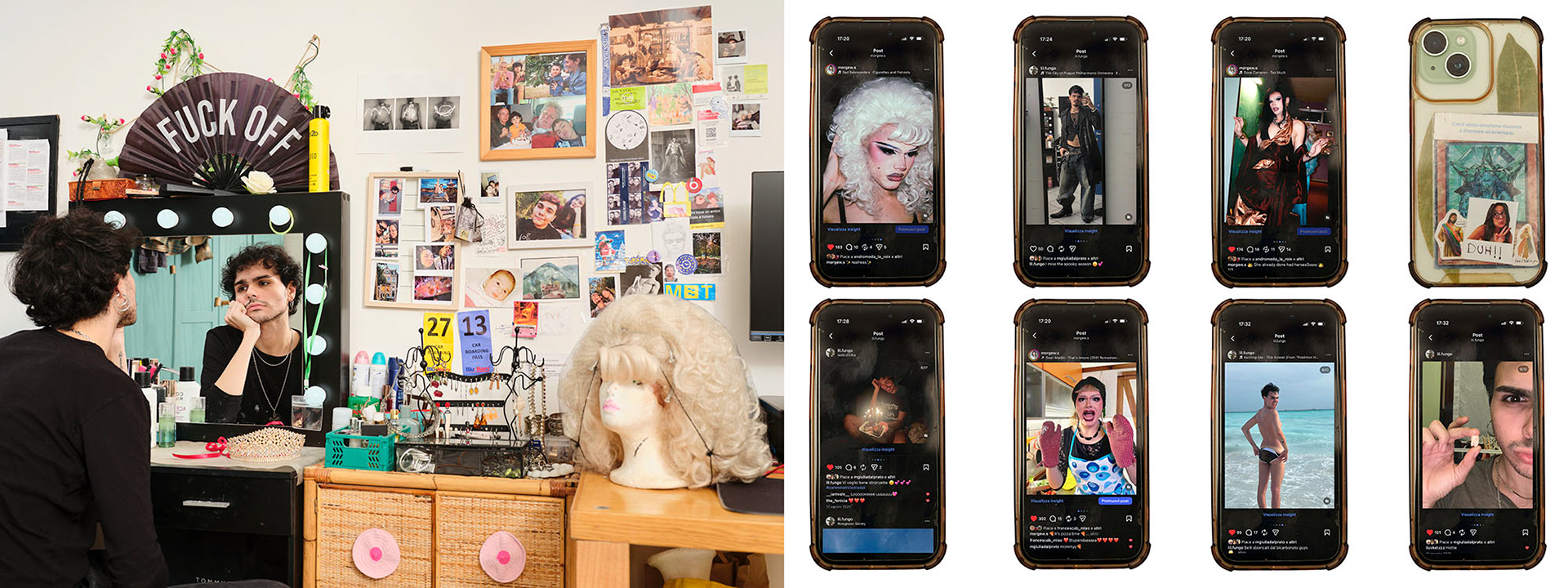
Born in Imola and now in Florence studying Fashion Design, Andrea has built a drag persona merging irony, aesthetics, and stage presence, alongside theatre and university. His first smartphone came at 12 or 13, without conflict, and today his relationship with social media is pragmatic: TikTok to scroll, Instagram as a professional showcase across two separate accounts, personal and drag. He follows Jinkx Monsoon closely as a model of merging entertainment with activism, and believes drag is inevitably political. He shares work and joy online but keeps sadness and intimacy off-frame, dreaming of an eventual, more analog future — fewer accounts, more printed photography books.